Why international crews keep choosing Thailand
Thailand has hosted international productions for half a century, from James Bond in Phang Nga Bay to the third season of The White Lotus. The reasons are practical: very different looks within a short trip, crews who are used to foreign productions, rental houses with current camera and lighting gear, and a government rebate that pays back part of the local spend.
This guide covers what matters when you plan a shoot here: locations, crews, permits, the cash rebate, seasons and budgets. It is written from our base in Phuket, where MStudio runs three studio halls, an equipment rental floor and a production team.
One country, many looks
Within a few hours of travel you can move from Bangkok's skyline and street markets to temples and old towns, rainforest, limestone karsts and white sand beaches. That range is why Thailand often stands in for other countries: it played Vietnam in The Deer Hunter and Good Morning, Vietnam, and it stood in for Dhaka in Extraction.
The locations you will recognise from the screen most often:
Bangkok: skyline, rooftops, markets and the river, as in The Hangover Part II.
Ayutthaya and Chiang Mai: historic temples, Lanna architecture and mountain forest in the north.
Phang Nga Bay and Krabi: limestone karsts rising straight out of the sea. Ko Tapu is still called James Bond Island after The Man with the Golden Gun (1974).
Phi Phi Islands: Maya Bay, where The Beach (2000) was filmed.
Phuket and Koh Samui: beaches, resorts, jungle and the Sino-Portuguese shophouses of Phuket Old Town. The White Lotus season 3 filmed on Koh Samui, in Phuket and in Bangkok.
Why Phuket works as a production base
Phuket International Airport has direct flights from across Asia, the Middle East and Europe, so crew and kit land close to set. From the island you reach Phang Nga Bay in about an hour by road, Krabi and the Phi Phi Islands by boat, and beaches, jungle and Old Town streets without leaving Phuket at all.
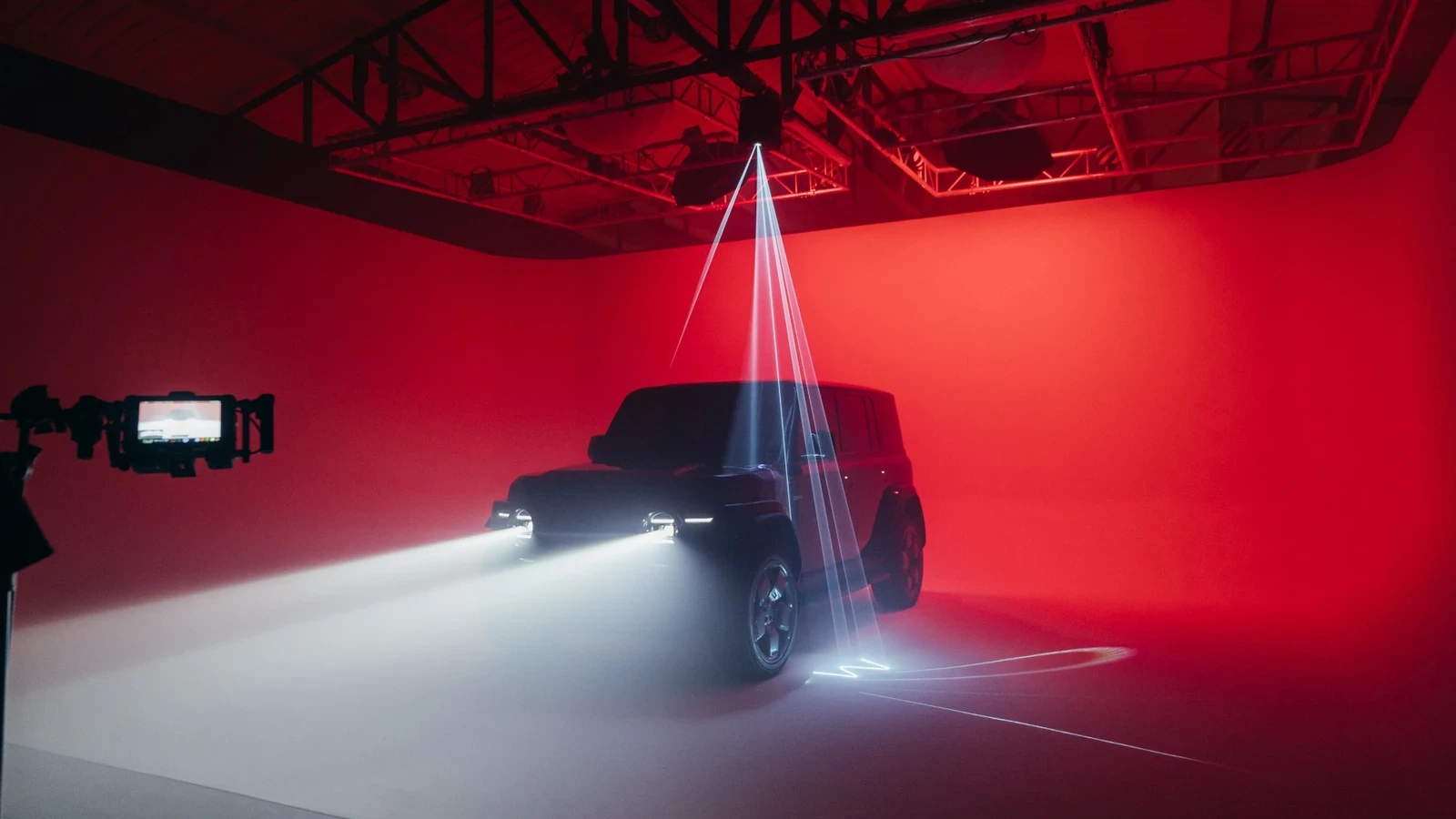
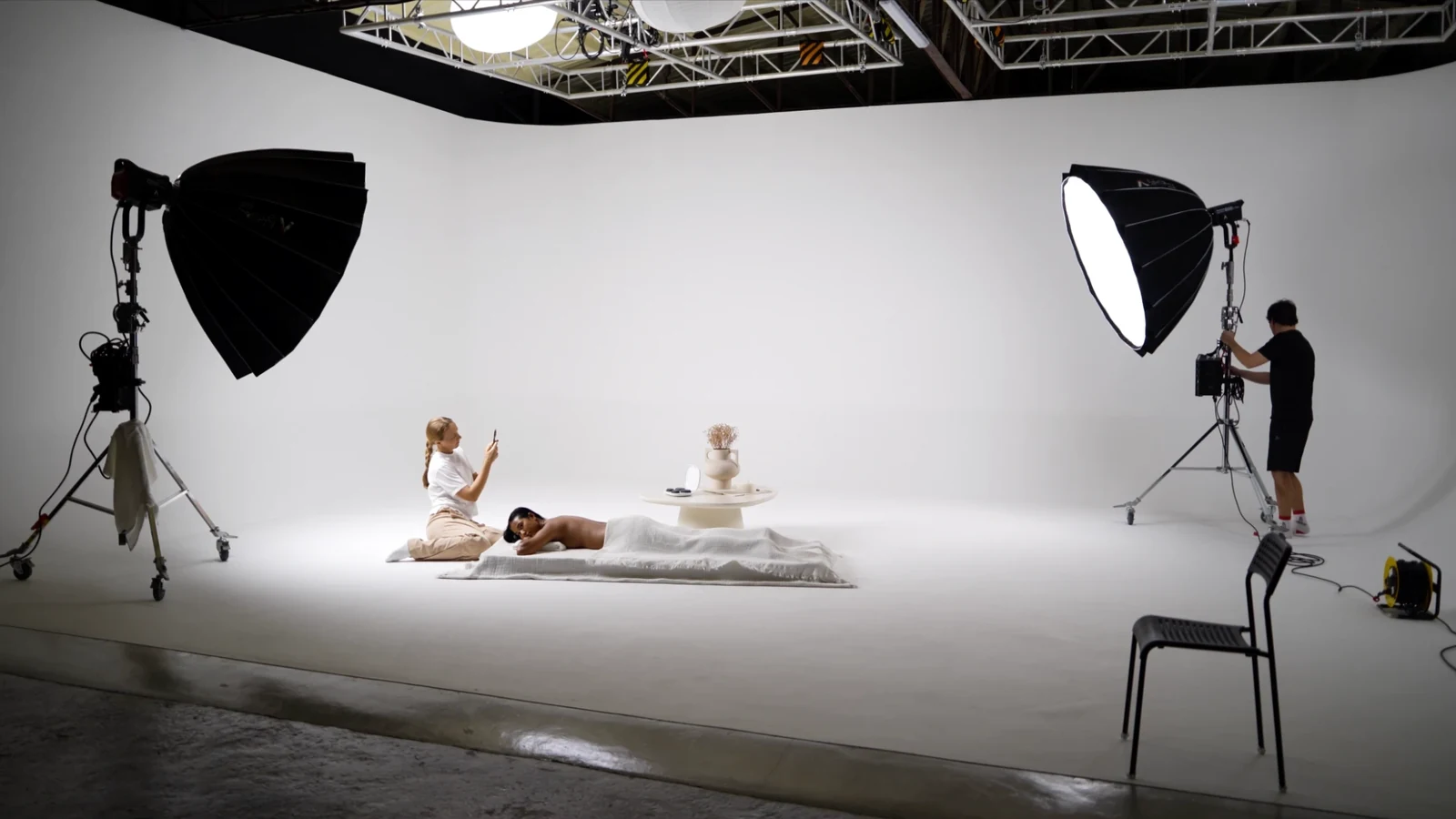
The weak point of every location shoot is weather and control over light. That is why MStudio sits in central Phuket: three air-conditioned halls of 50, 60 and 150 m², 500 m² of shooting space in total, including a 75 m² drive-in white cyclorama under a motorized overhead truss. When the forecast turns, the day moves indoors instead of being lost. See the halls on our studios page.
Camera, light and grip are on the same site. Aputure lights, cinema cameras, lenses, grip and modifiers can be added to a studio booking or taken on location; the full inventory with daily prices is on the rental page.
Working with Thai crews
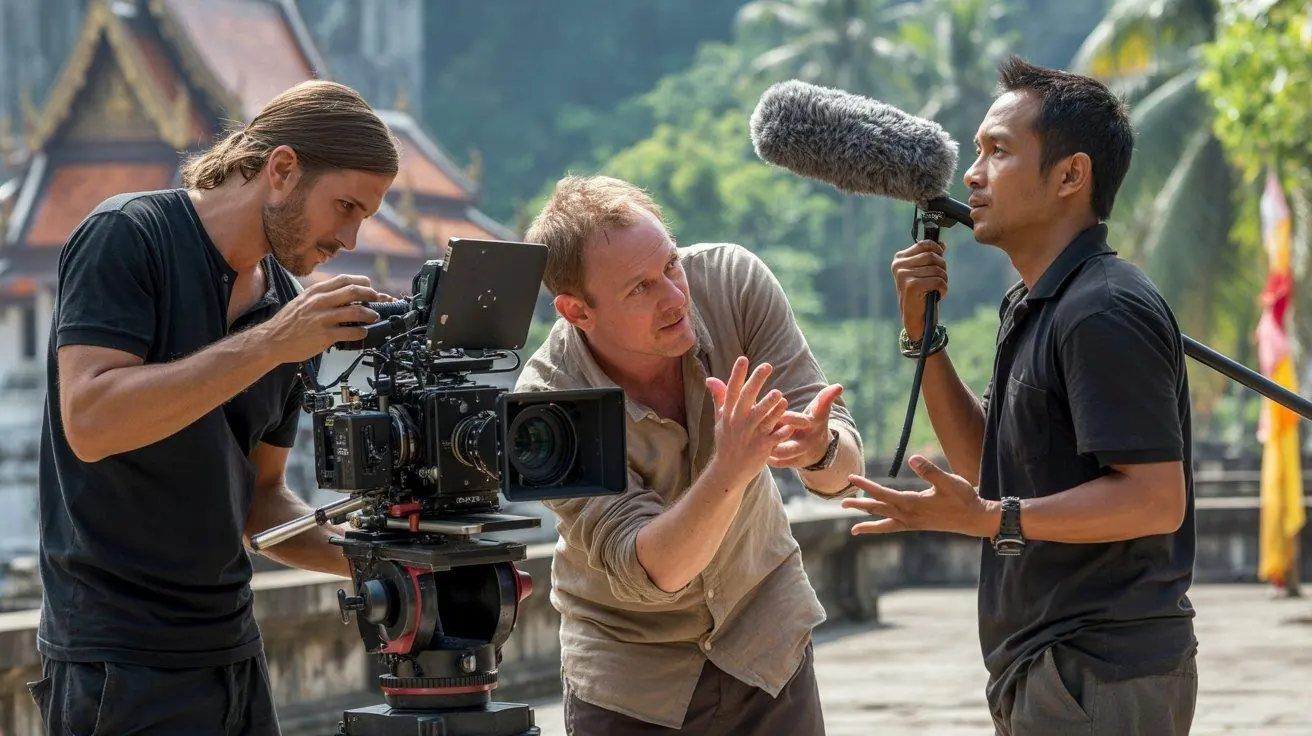
Thai crews have years of experience on international features, series and commercials, and department heads usually work in English. A few cultural habits make the days smoother:
Respect seniority and keep criticism calm and private. Public blame makes people lose face and slows the whole set down.
People may agree politely in a group even when something is unclear, so confirm key details one to one.
A bilingual coordinator or line producer on set saves hours of misunderstandings.
Warmth goes a long way. A crew that feels respected solves problems before you notice them.
Permits: you need a registered local coordinator
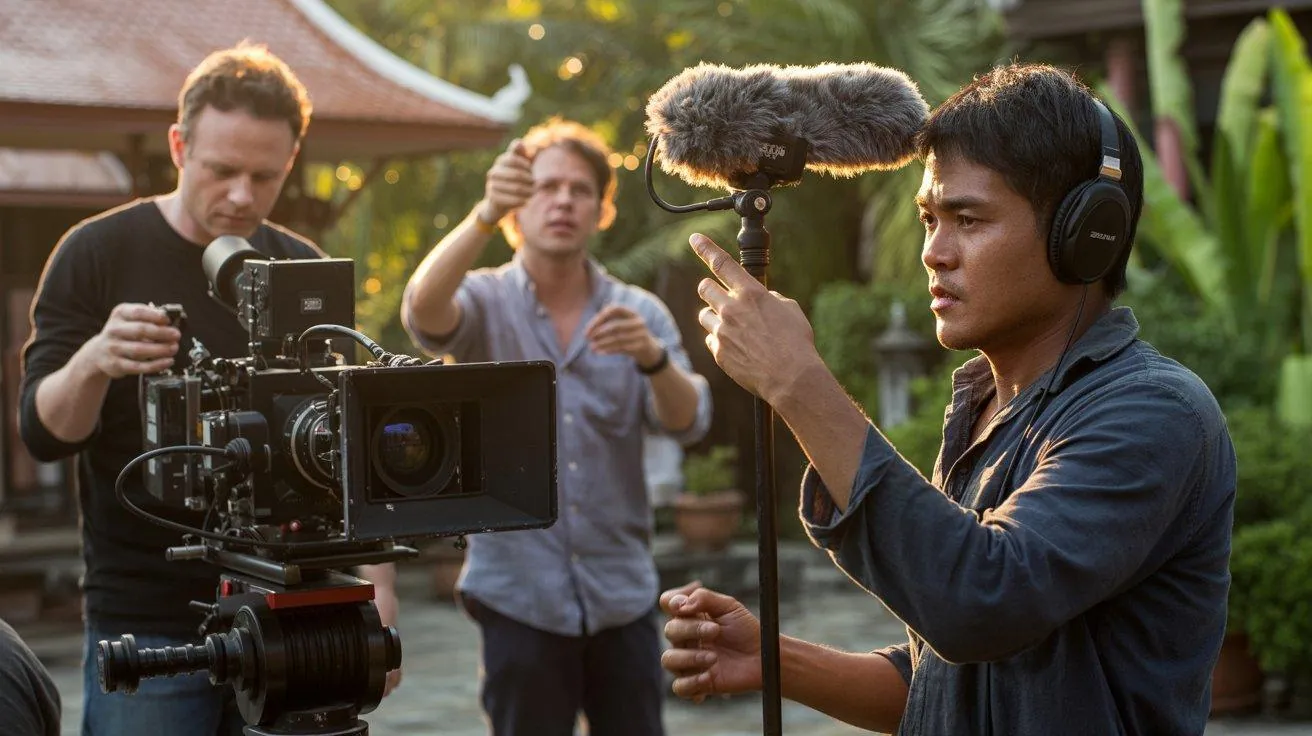
Every foreign production that films in Thailand needs a permit from the Thailand Film Office, part of the Department of Tourism. You cannot apply on your own: the application is filed by a local coordinator, a company or person registered with the Film Office, who represents your production during the shoot and after it.
Have these ready for your coordinator:
a letter that assigns the coordinator to your production;
the script, treatment, synopsis or storyboard, depending on the type of production;
the shooting schedule with exact dates and locations;
the list of foreign crew with names, passport numbers, positions and arrival dates.
National parks, temples, some public spaces and drone flights need their own permissions on top of the film permit, so lock locations early and leave time for approvals. Foreign crew also need the right visas and work permits; your coordinator will tell you which apply to your shoot.
The Thailand cash rebate: up to 30%
Since 1 January 2025 Thailand pays foreign productions a cash rebate of 15% to 30% of qualifying local spend, with no cap on the amount. The scheme is run by the Thailand Film Office:
15% base rebate once your local spend in Thailand reaches 50 million baht (about US$1.4 million);
an extra 5% for local spend of 100 to 150 million baht, or an extra 10% above 150 million baht;
an extra 5% for hiring Thai nationals in key positions, and an extra 5% for promoting Thai tourism and soft power on screen;
smaller bonuses for filming in designated provinces and for finishing post-production in Thailand.
The total stops at 30% of qualifying spend. Criteria change, so check the current rules on the Thailand Film Office website before you budget around them. Commercials and short shoots usually stay below the 50 million baht threshold; for them the savings come from local rates rather than from the rebate.
When to shoot: seasons on the Andaman coast
Phuket, Krabi and Phang Nga sit on the Andaman Sea. The dry season runs roughly from November to April, with calm water, clear skies and the most predictable light; March and April are the hottest months. From May to October the southwest monsoon brings rain and rougher seas, although showers often come in short, heavy bursts with dramatic skies in between. On the Gulf side, Koh Samui gets most of its rain from October to December.
Build weather days into any schedule that depends on boats or beaches, or keep a studio day in reserve. A cyclorama hall does not care about the forecast.
Budgeting a shoot in Thailand
Local crew rates, accommodation, transport and equipment rental usually cost less than in the US, Europe or Australia, but the difference depends on the size of the production and on how much you fly in. Instead of trusting general percentages, ask for a quote built on your shot list.
For orientation: MStudio's halls start at 4,000 THB for the first two hours in Studio 50 and Studio 60, then 1,500 THB per hour, and at 7,000 THB in Studio 150, then 3,000 THB per hour. Equipment is rented by the day, and rentals of four days or more get 20% off.
Planning checklist
Define the look and the shot list, then choose locations and the studio days you need.
Appoint a registered local coordinator and start the permit application.
Confirm visas and work permits for the foreign crew.
Book Thai crew, cameras, lighting and grip, and check what you can rent locally before shipping kit.
Plan the moves between locations, including boats and drivers.
Add weather days or a studio backup day to the schedule.
If your local spend may pass 50 million baht, set up the rebate paperwork from day one.
Frequently asked questions
Do I need a permit to film in Thailand?
Yes. Foreign productions need a Thailand Film Office permit, filed through a local coordinator who is registered with the Film Office.
How big is the Thai film rebate?
From 15% to 30% of qualifying local spend since January 2025. It starts at 50 million baht of spend in Thailand and has no cap on the amount.
When is the best time to shoot in Phuket?
November to April for dry weather and calm seas. The rest of the year works well with weather days or studio days in the plan.
Can we rent cameras and lights in Phuket?
Yes. MStudio rents Aputure lighting, cinema cameras, lenses, grip and modifiers from its own stock in Phuket, for studio days or for location shoots.
Which famous films were shot in Thailand?
The Man with the Golden Gun, The Deer Hunter, Good Morning, Vietnam, The Beach, The Hangover Part II, Extraction and the third season of The White Lotus, among many others.
Planning a shoot in Phuket? Send us your brief or message us on WhatsApp at +66 83 512 3340, and we will put studio time, gear and crew together around your dates.