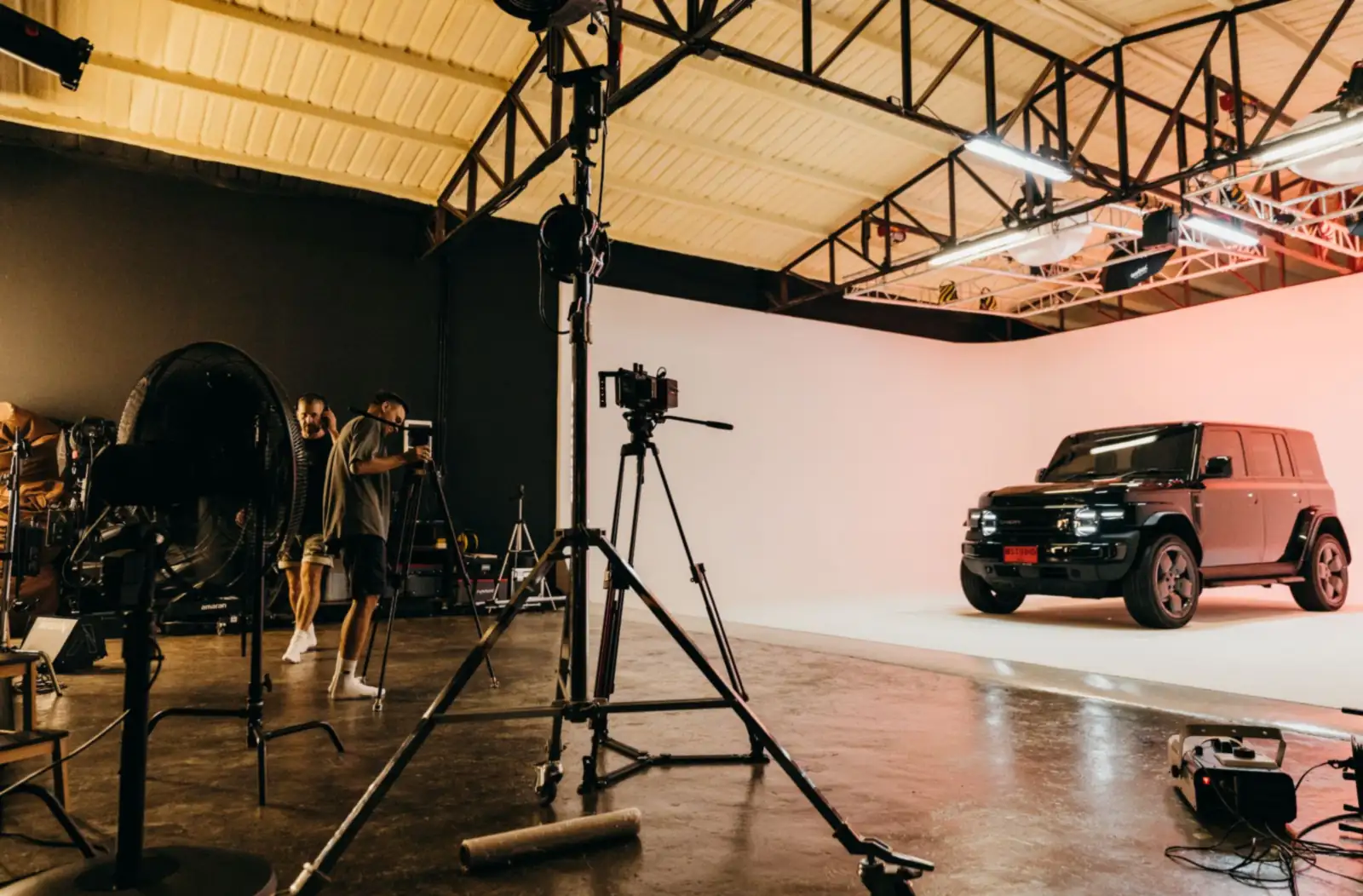
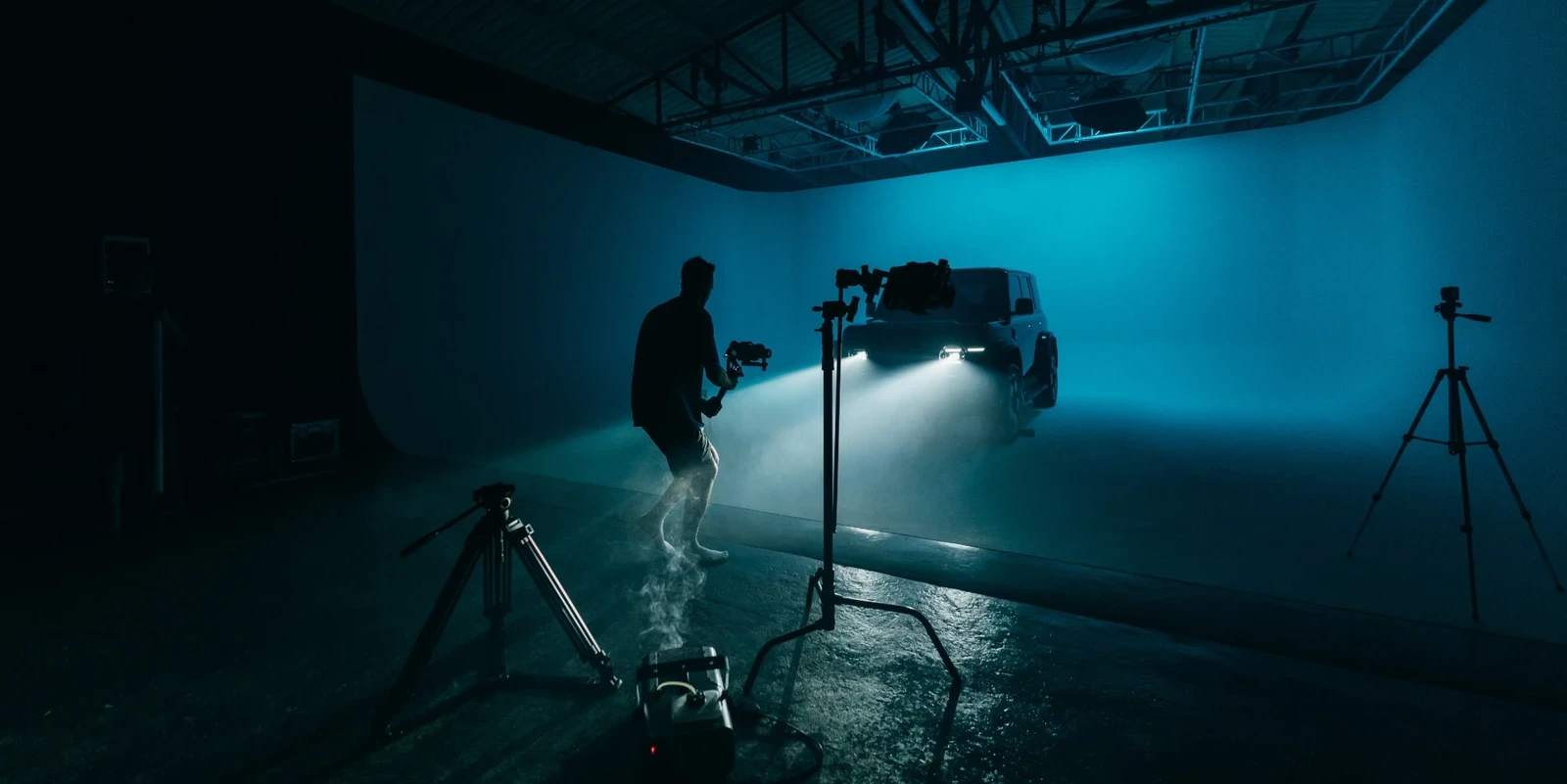
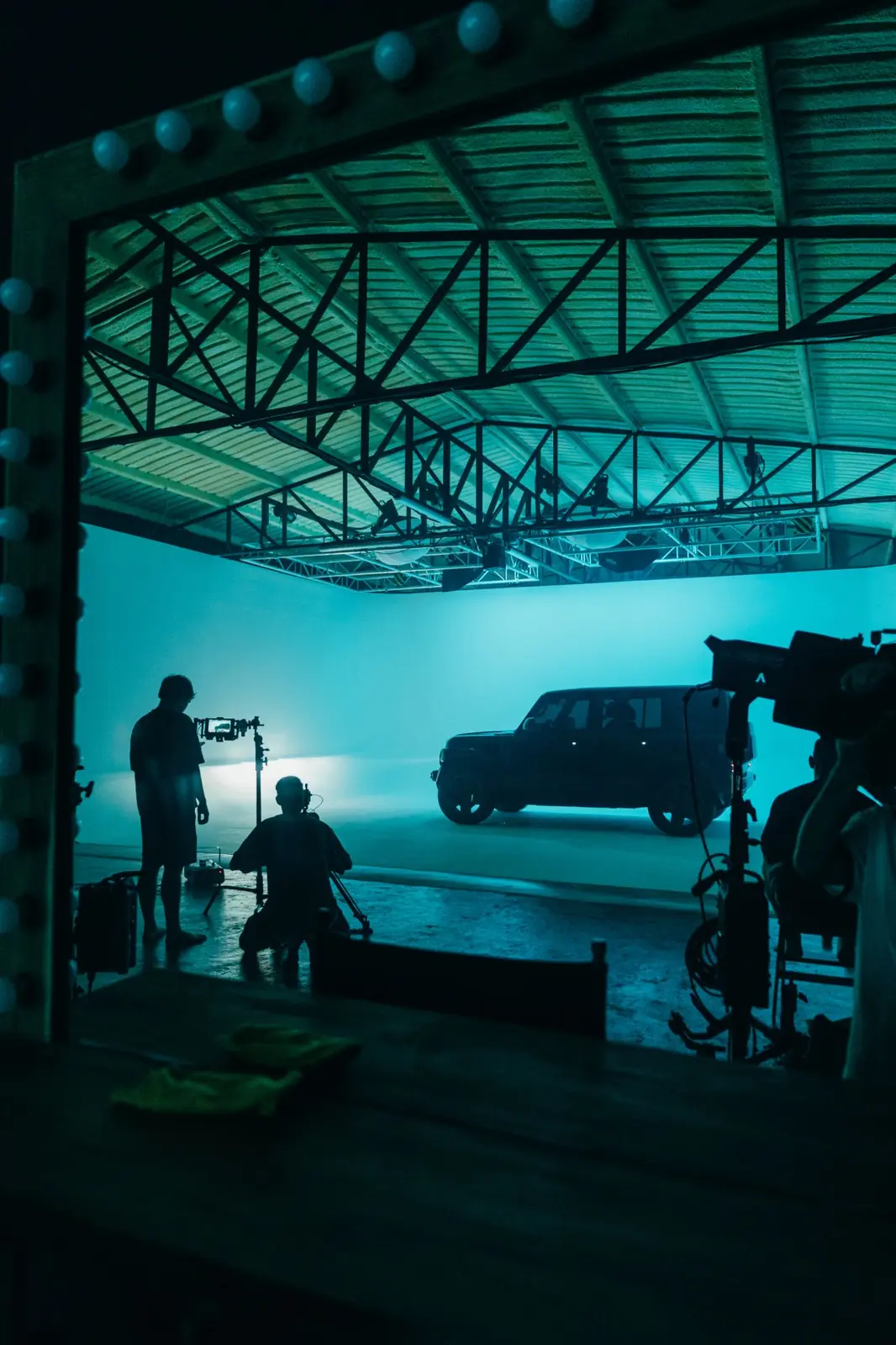
Behind the scenes of a two-day car photography and video production in Studio 150 using a white cyclorama, RGB lighting, lasers, smoke and large overhead diffusion.
Automotive photography and video production are among the most technically demanding and creatively rewarding forms of commercial production. Every vehicle has its own body geometry, paint finish, glass, chrome, interior materials and reflective surfaces. For that reason, there is no single lighting setup that works for every car.
Recently, we completed a two-day studio shoot with the Chery V23 at M Studio Asia in Phuket, Thailand.
The production took place in Studio 150, our largest shooting space and a studio designed for large-scale commercial productions, automotive photography, car commercials, product shoots and video production.
Over two full shooting days, we created multiple lighting setups using white light, RGB lighting, lasers, smoke, soft and directional light. We photographed and filmed the exterior, details and interior of the Chery V23, constantly rebuilding the lighting to create a different visual character for each setup.
Why automotive photography requires a different approach
One of the biggest challenges in professional car photography is reflections.
A glossy vehicle body behaves almost like a giant mirror. It reflects the lights, ceiling, walls, cyclorama, flags, camera equipment and even members of the production crew.
For this reason, professional automotive photography and car video production is not simply about pointing lights at a vehicle. It is about designing and controlling what the vehicle reflects.
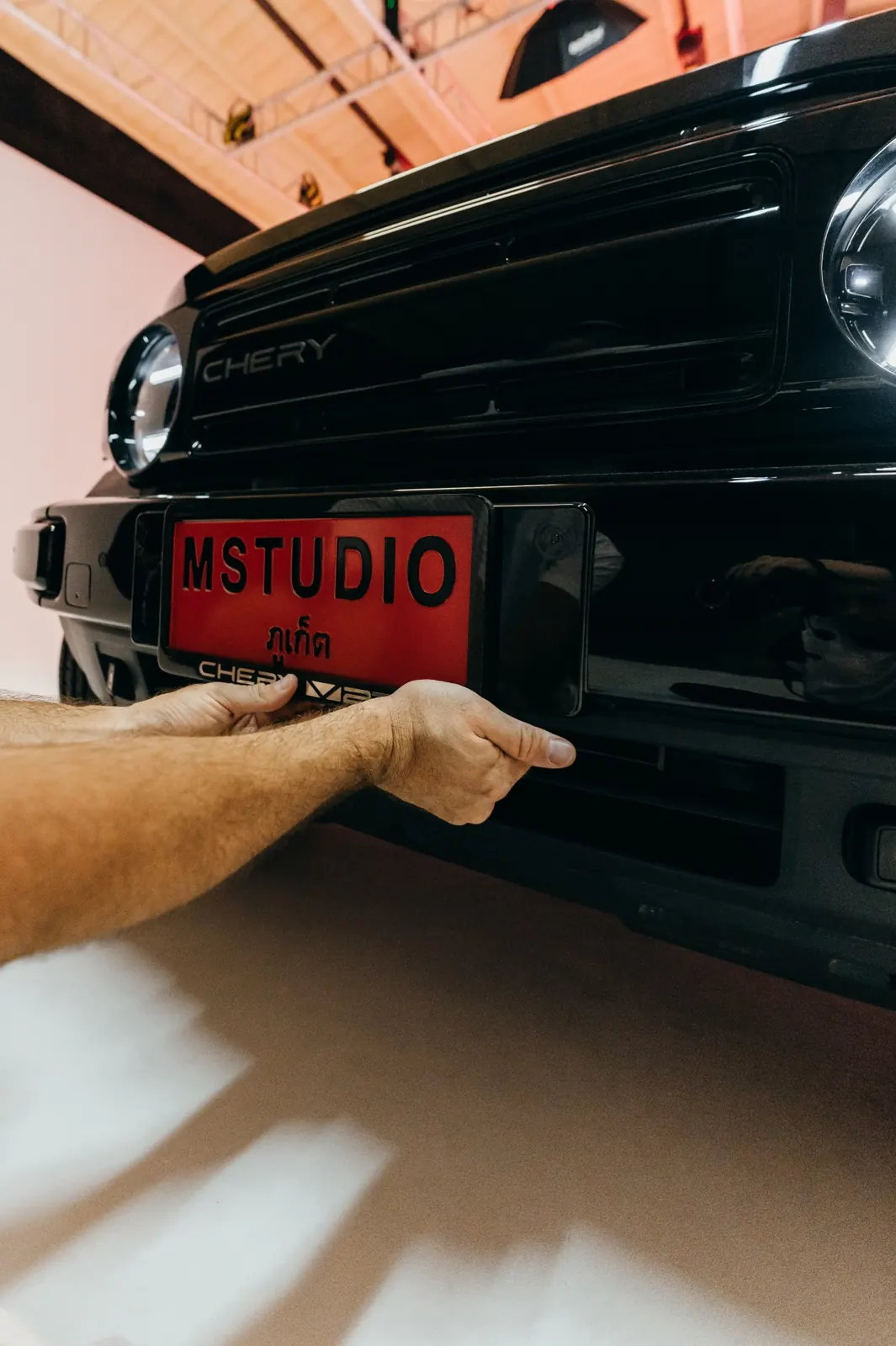
The position, size and angle of a light source determine how the hood, roof, doors and body lines appear on camera. Large soft sources create long, controlled gradients across the paintwork rather than small, harsh highlights.
With the Chery V23, our goal was to preserve a strong sense of volume while emphasizing the distinctive geometry and character of the vehicle.
Lighting setups for the Chery V23
Shooting a car on a large white cyclorama
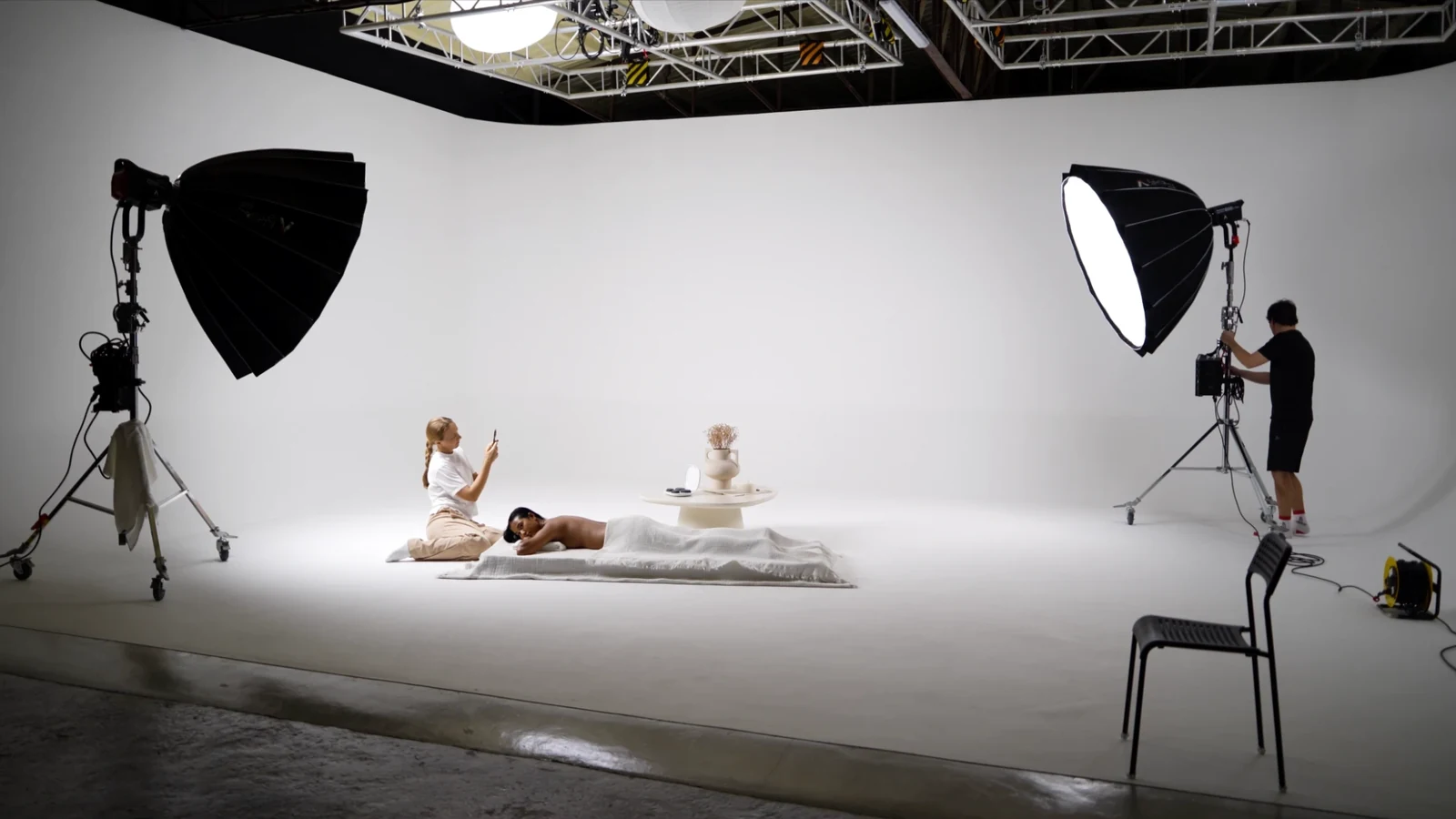
The Chery V23 shoot took place on the large white cyclorama inside M Studio Asia Studio 150.
A white cyclorama creates a clean, seamless environment with no visible horizon between the floor and wall. For automotive advertising, this gives the director, cinematographer and photographer much greater freedom to choose camera positions and create clean commercial compositions.
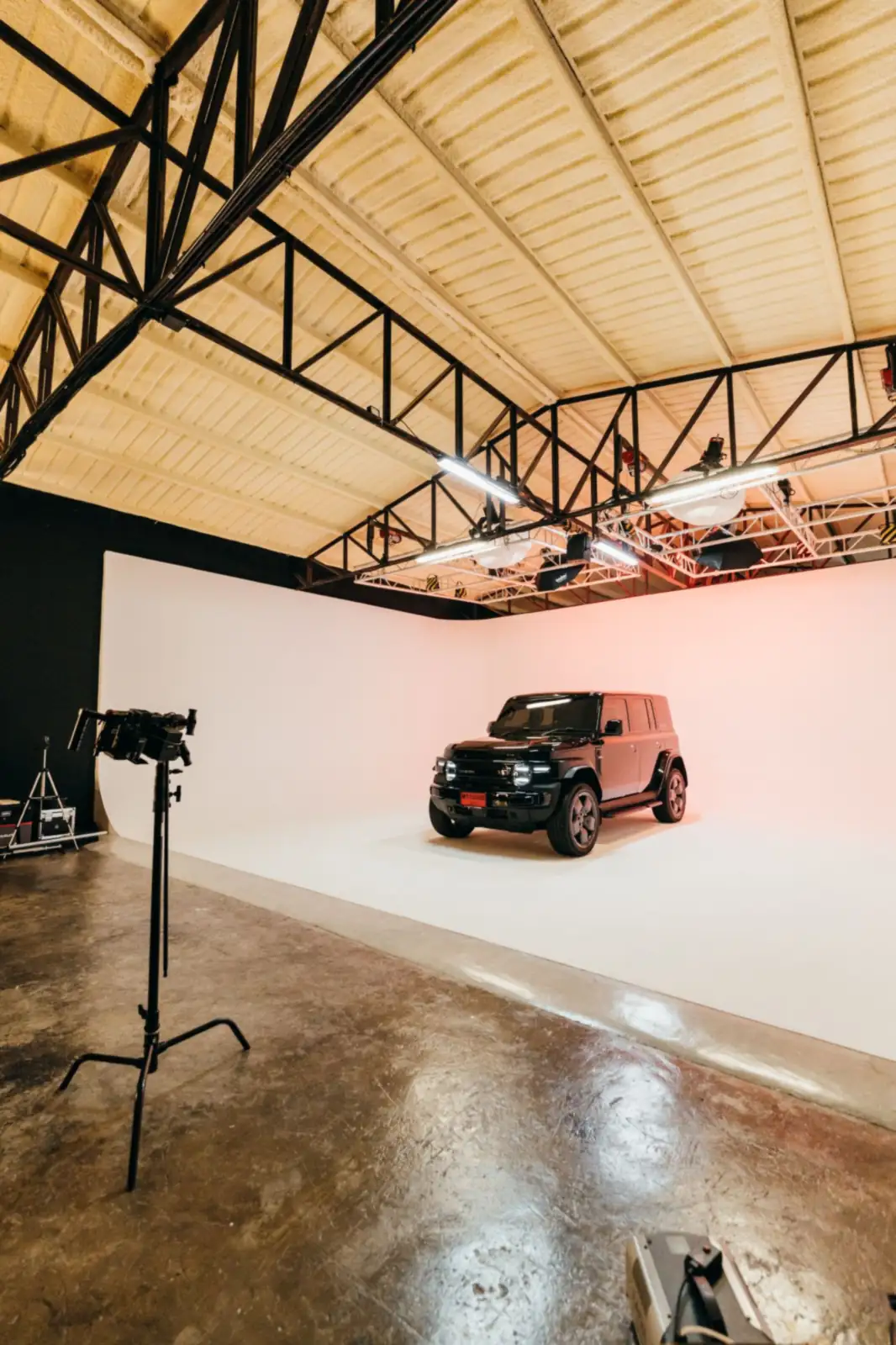
The white cyclorama also becomes part of the lighting setup itself. Its large white surfaces reflect light back onto the vehicle, creating natural fill and helping produce smooth gradients across the body.
However, this also requires careful control. Too much uncontrolled white reflection can flatten the shape of a vehicle, so flags, frames and lighting modifiers are used to introduce contrast and sculpt the reflections.
Creating a huge soft source above the car
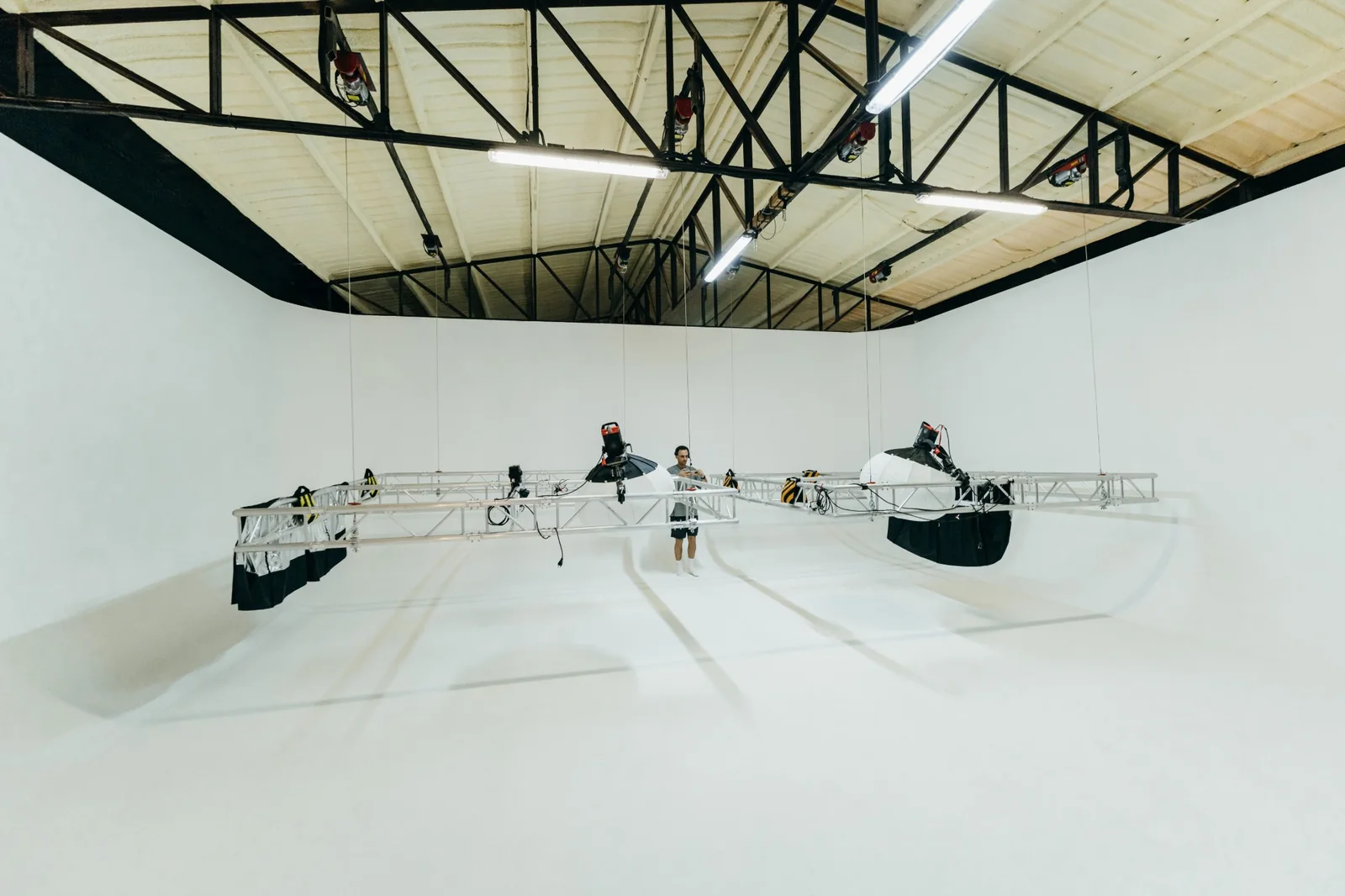
One of the key elements of our automotive lighting setup was a large diffusion frame suspended above the vehicle.
Powerful fixtures were directed through diffusion material, effectively turning several smaller sources into one enormous soft source.
For car photography, this is extremely important.
A large overhead diffused source produces long, clean reflections across the hood and roof while avoiding small, distracting hotspots.
By adjusting the position and angle of the frame, we can effectively paint the body of the car with light.
This is why, in professional car commercial photography and automotive cinematography, the physical size and shape of the light source can be just as important as its output.
RGB lighting and color
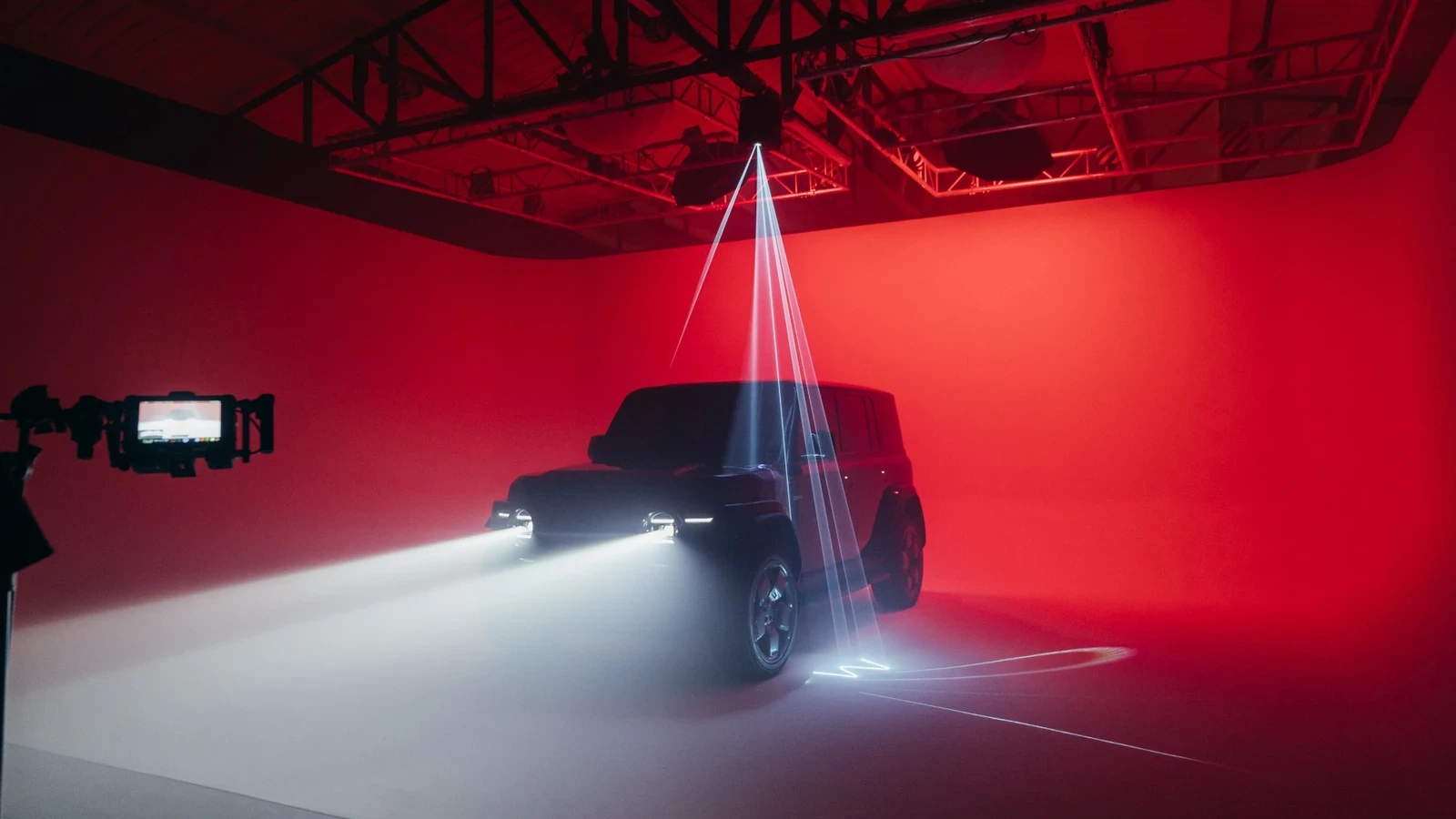
For several setups during the Chery V23 production, we used RGB lighting to completely change the visual atmosphere of the studio.
RGB fixtures allow us to control hue, saturation and intensity without rebuilding the entire lighting setup.
A white cyclorama works particularly well with colored light because it becomes a large neutral canvas for creating gradients, saturated backgrounds and different visual environments.
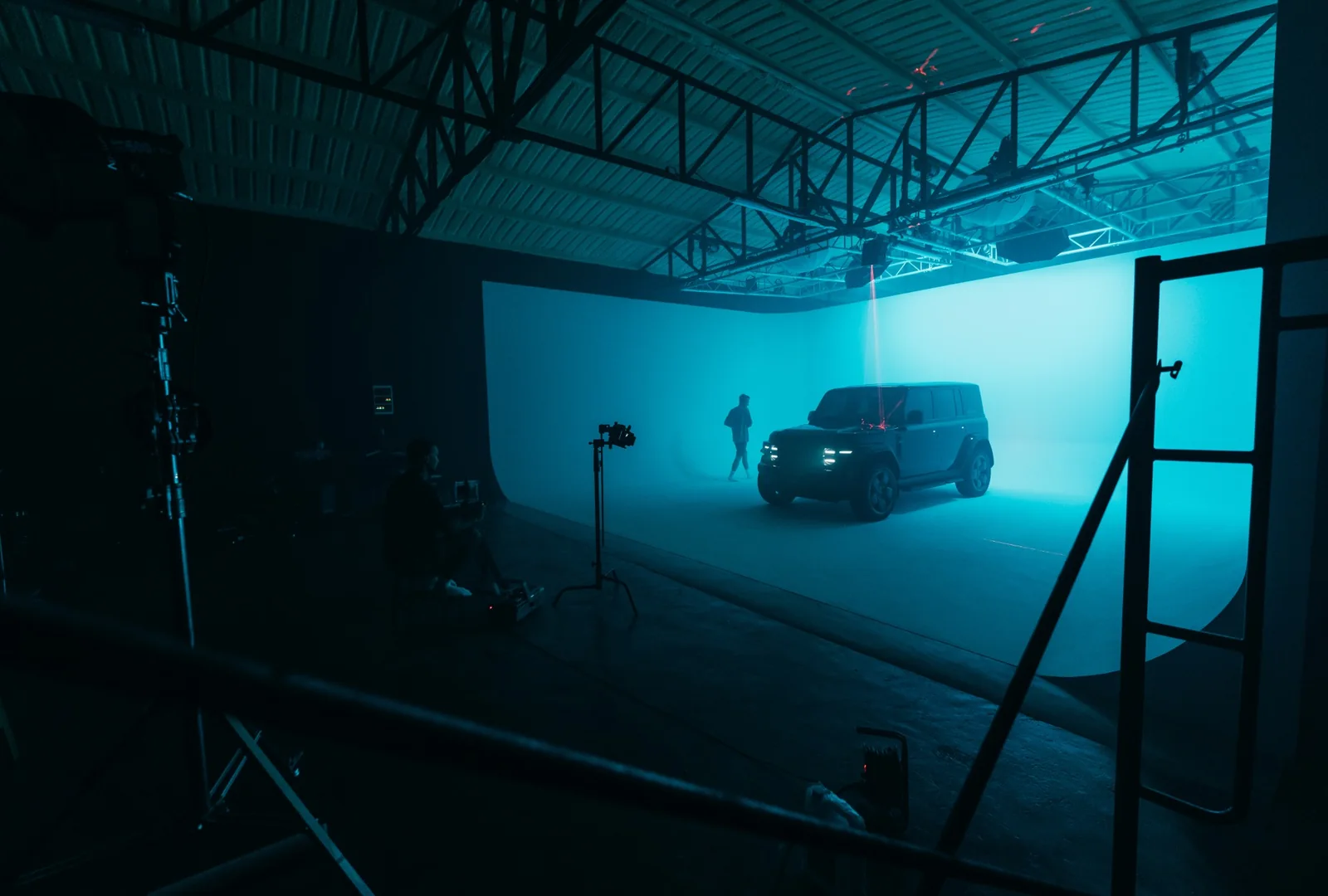
During the two-day production, we could move from clean commercial automotive photography on white to much more cinematic scenes with colored highlights and dramatic contrast.
This approach works especially well for automotive advertising, car commercials, social media campaigns, automotive content production and branded video production.
Lasers, haze and smoke effects
For some scenes, we combined laser lighting with controlled smoke and haze.
A laser beam becomes dramatically more visible when fine atmospheric particles are present in the air. This allowed us to create graphic lines around the Chery V23, emphasize its silhouette and introduce additional depth into the frame.
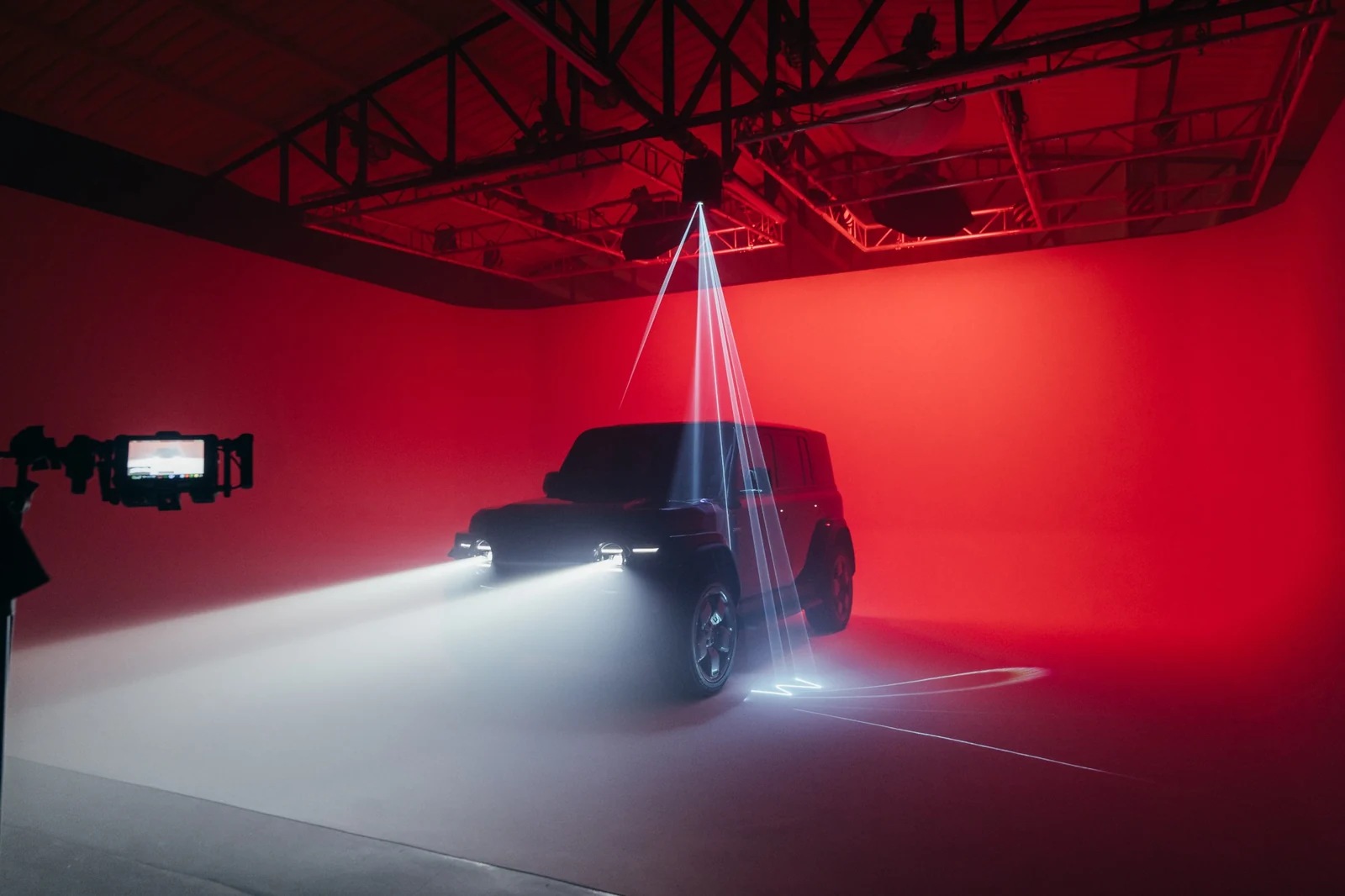
The amount of haze has to be carefully controlled. The purpose is to reveal the light and add atmosphere without obscuring the vehicle.
Combining lasers, RGB lighting and smoke effects gave us a completely different visual language from conventional catalogue-style automotive photography and allowed us to create more futuristic, cinematic imagery.
Softboxes, modifiers and reflection control
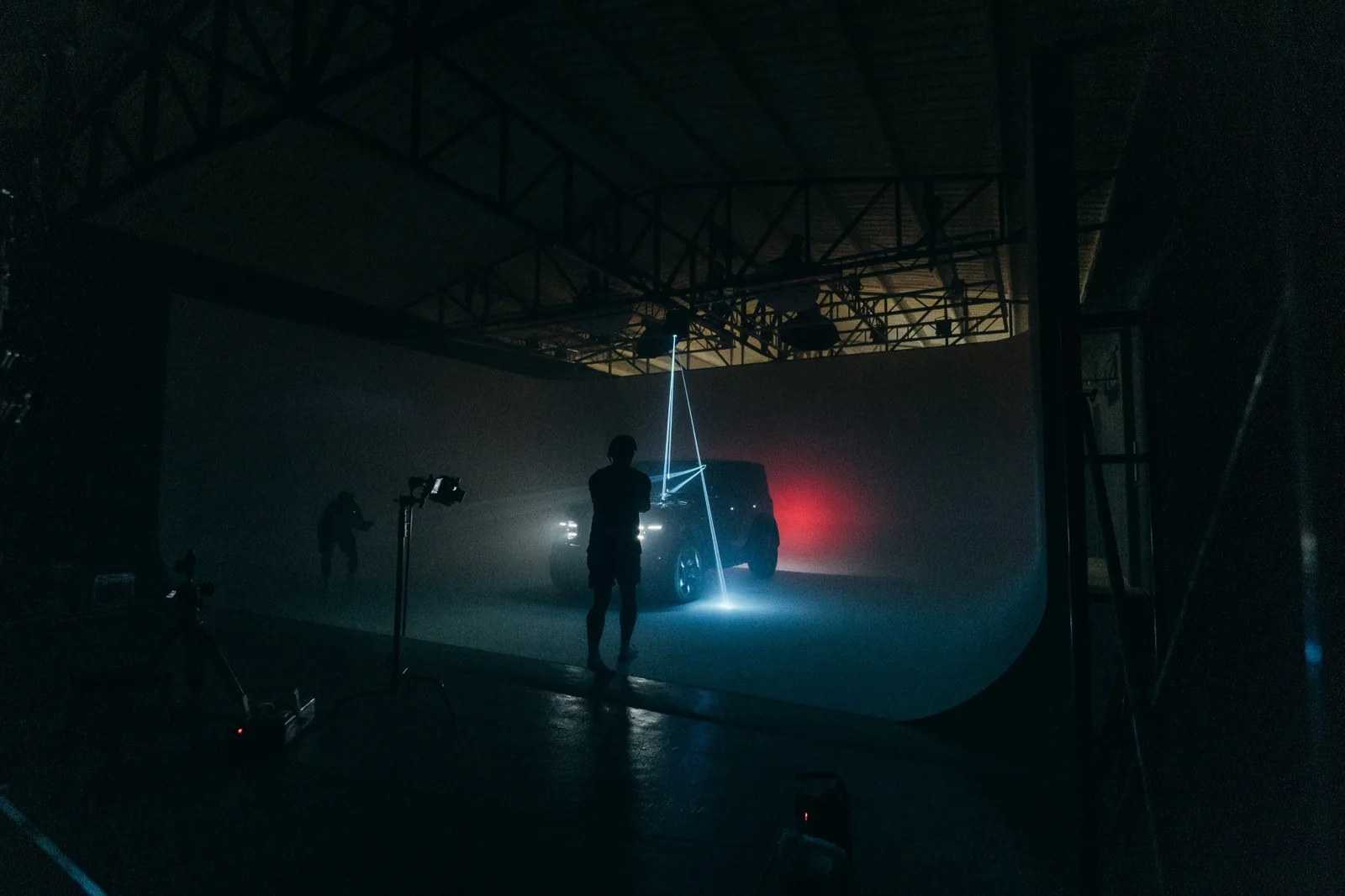
Throughout the production, we worked with multiple lighting modifiers including softboxes, diffusion frames, directional sources, flags and grip equipment.
In automotive photography, moving a light or flag only a small distance can completely change the reflection across a door, windshield or hood.
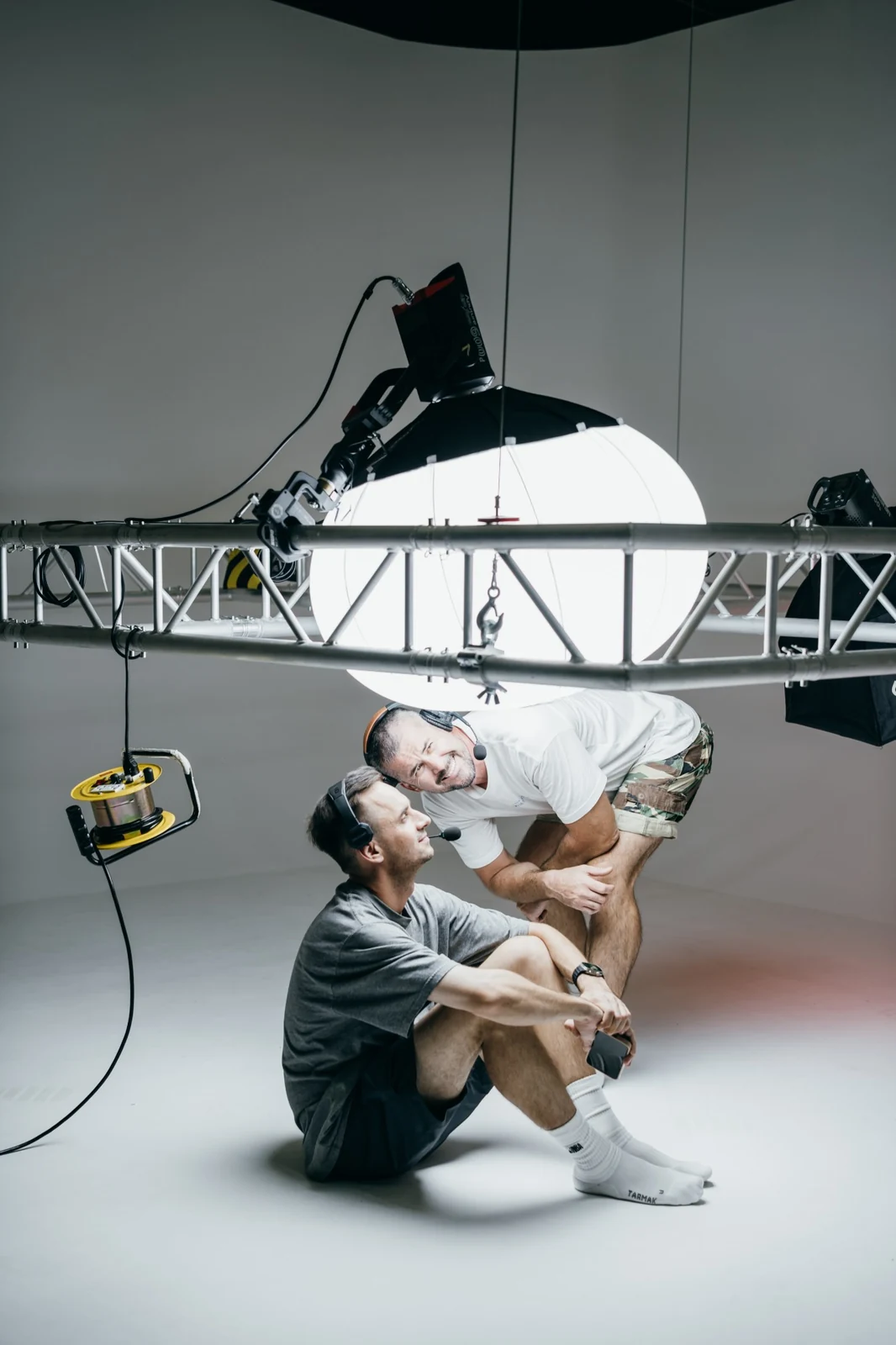
For this reason, the lighting is constantly adjusted according to the camera position.
Sometimes a perfect reflection exists for only one specific camera angle. As soon as the camera moves, the lighting has to move with it.
This constant interaction between camera position, lighting and the reflective surfaces of the vehicle is one of the reasons professional automotive photography is so technically interesting.
Shooting the Chery V23 interior
Another part of the production focused on the vehicle interior.
Car interior photography and automotive interior video production require a very different lighting approach.
Inside a vehicle, space is limited and many surfaces are extremely close together. Displays, windows, dashboards, glossy trim and decorative elements can all create unwanted reflections.
Smaller controlled sources and precise fill light become particularly important.
Our objective was not simply to document the interior, but to emphasize the design, materials, details and overall atmosphere of the Chery V23 cabin.
Why a professional automotive shoot requires a full crew
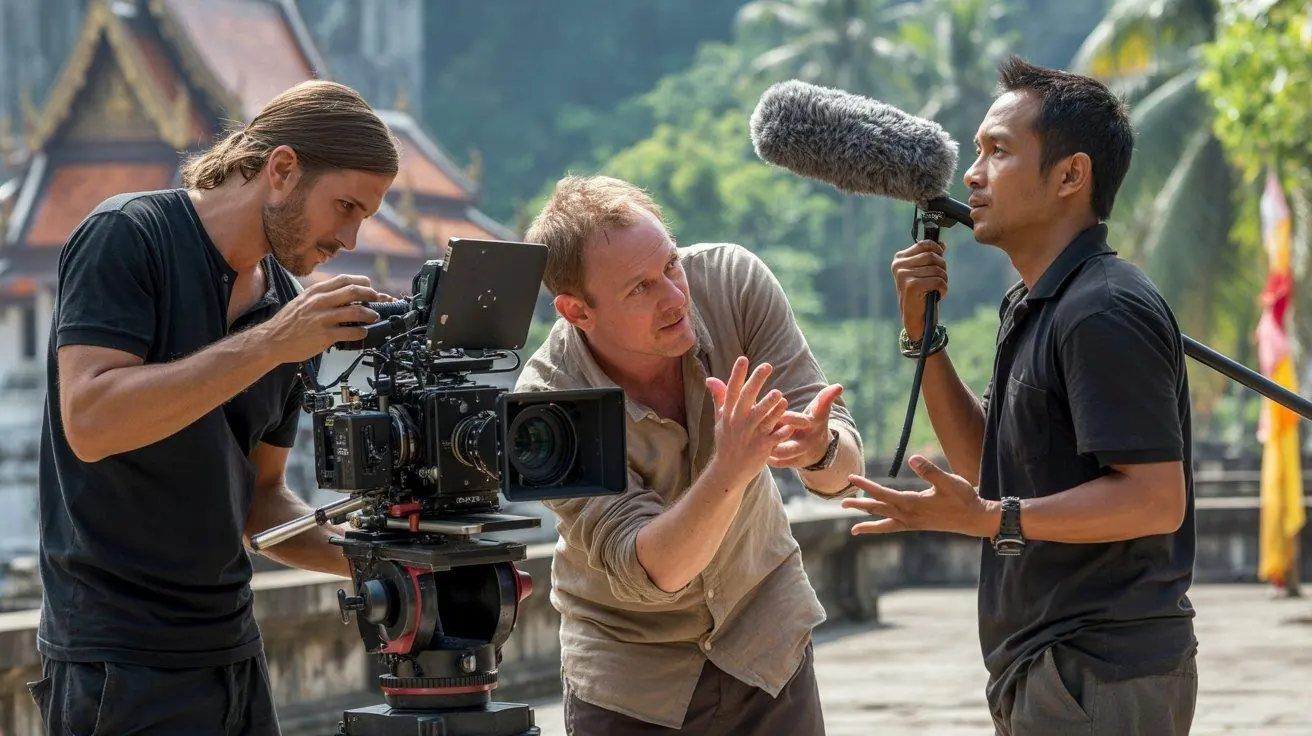
Behind a polished automotive image is usually a much larger team than the viewer realizes.
A professional car commercial production crew may include a director and cinematographer, gaffer, lighting technicians, camera assistants and production assistants.
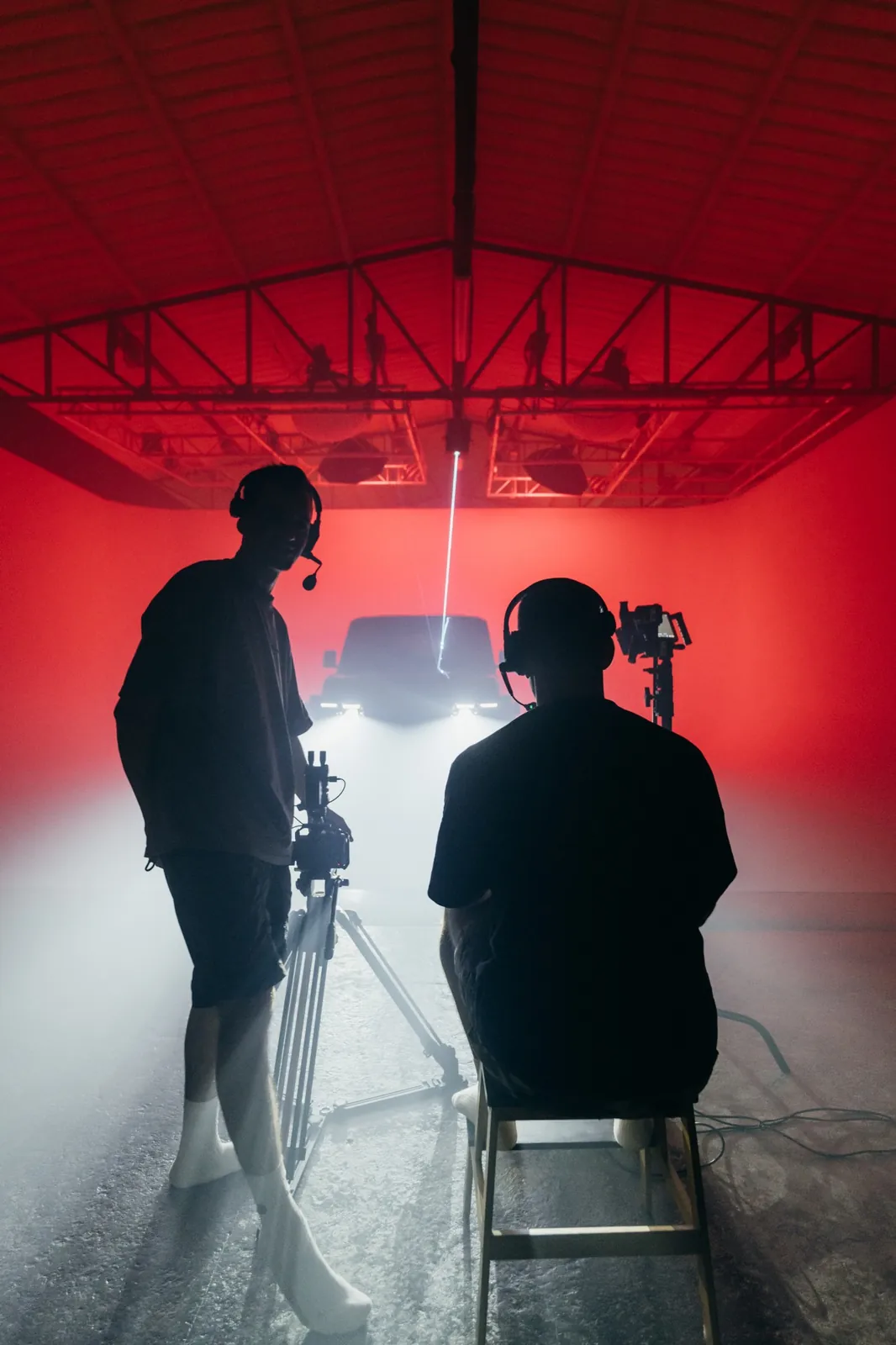
The director and cinematographer develop the visual language and camera approach. The gaffer translates that concept into a practical lighting setup. Lighting assistants rig, reposition and adjust fixtures, diffusion frames and flags, while camera and production assistants keep the technical and logistical side of the shoot moving efficiently.
Automotive lighting setups can be physically large, so teamwork is essential not only for speed but also for safety.
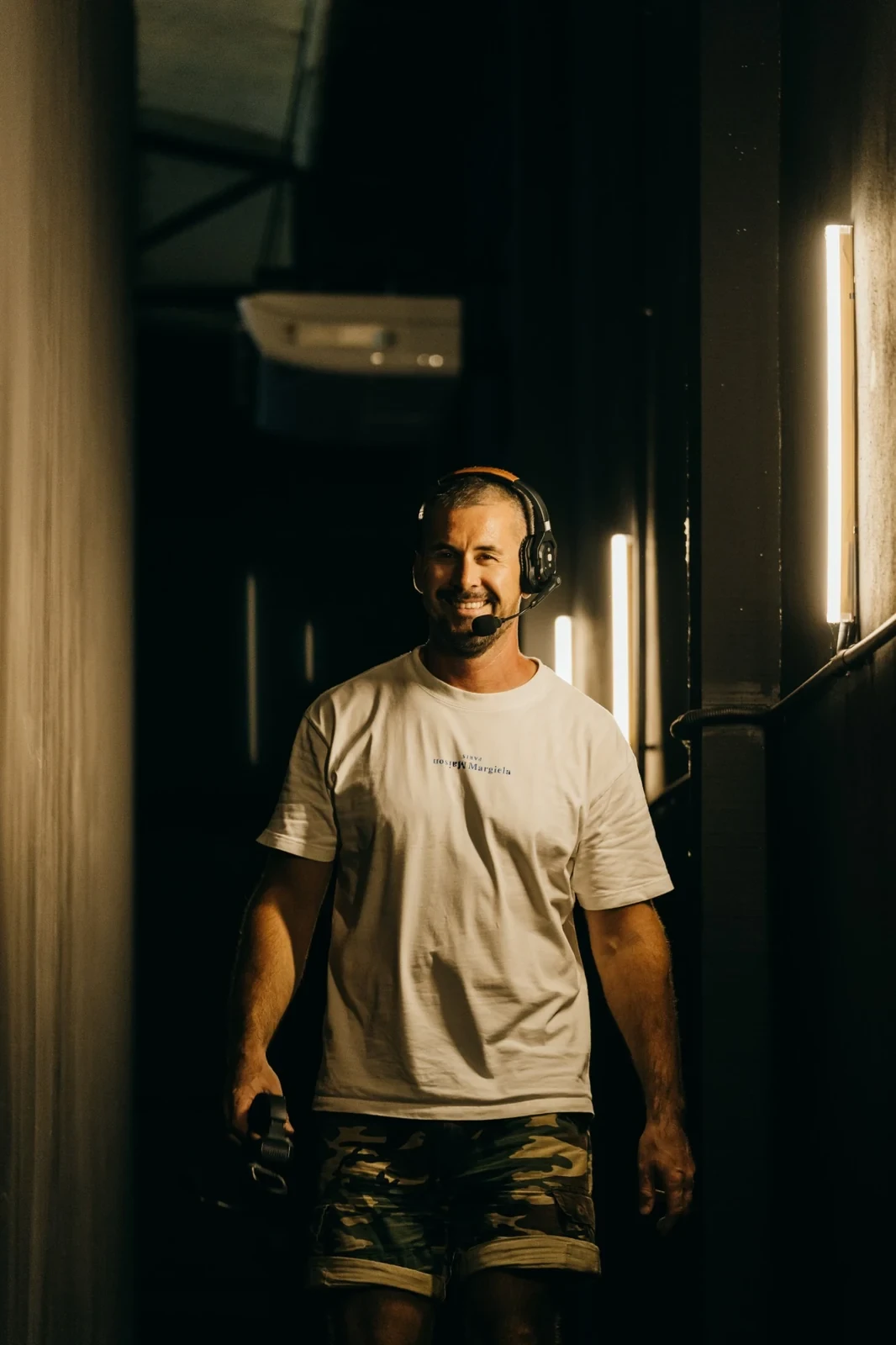
Our two days with the Chery V23 were another reminder that successful automotive production is always a team effort.
Why we wrap the tires before driving onto the white cyclorama
In some of our behind-the-scenes images, you may notice something unusual: before repositioning the Chery V23 on the white cyclorama, we wrapped the tires in protective plastic film.
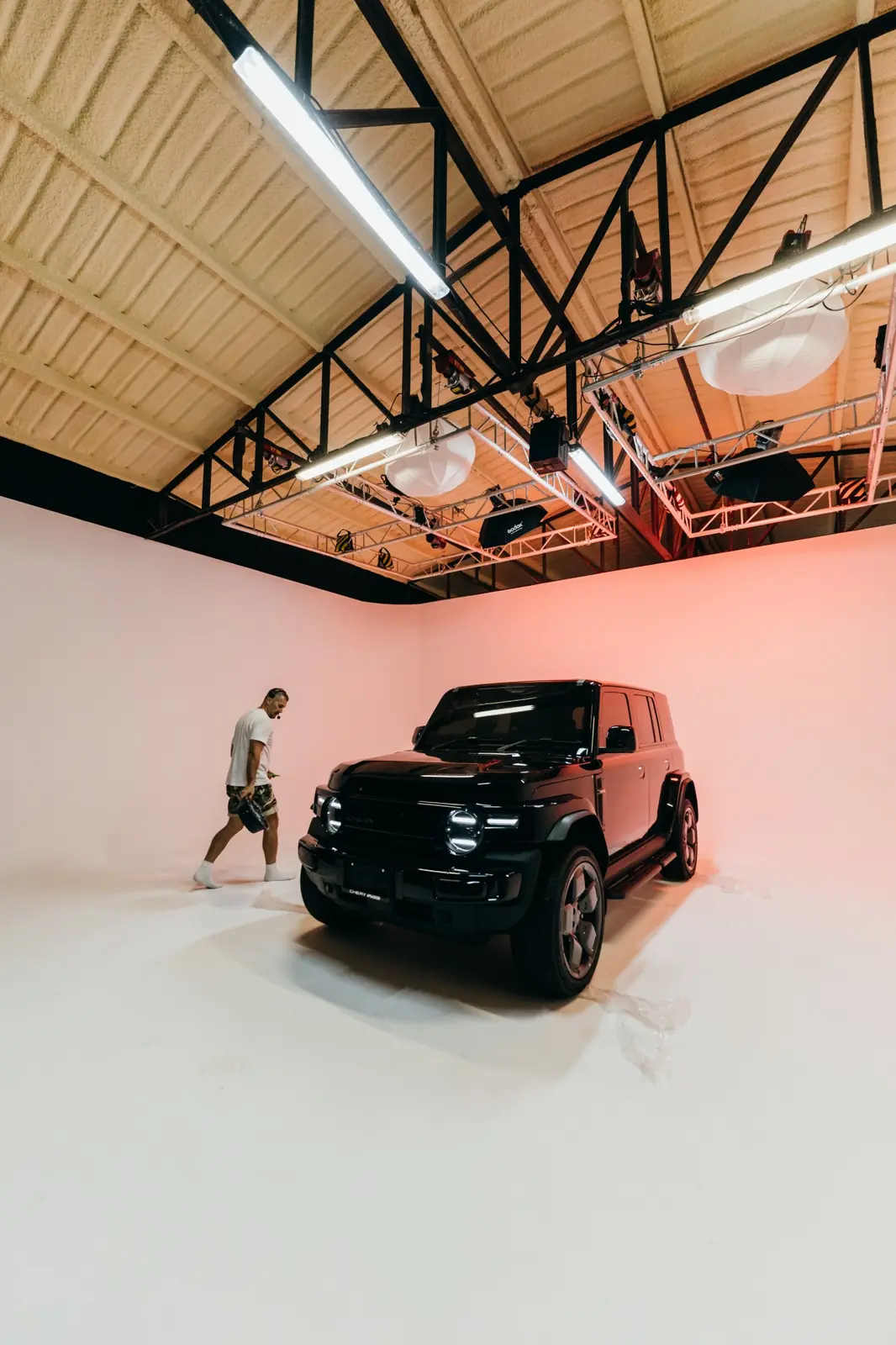
There is a practical reason for this.
Car tires can leave strong black marks on a white cyclorama floor, particularly when the steering wheel is turned while the vehicle is stationary.
These marks can be difficult to remove, and aggressive cleaning can gradually damage the perfectly white surface.
Even when a cyclorama repaint is already included in the production budget, we still protect the surface whenever possible.
Wrapping the tires prevents the rubber from making direct contact with the white floor during major repositioning.
It adds another step to the production process, but it helps keep the cyclorama clean throughout the shooting day and reduces unnecessary cleaning and repainting.
Why Studio 150 works for automotive photography and car commercials
A professional car photography studio needs much more than enough floor space for a vehicle.
There must also be room for camera movement, lighting fixtures, large diffusion frames, grip equipment and the entire production crew.
Studio 150 at M Studio Asia in Phuket provides approximately 150 square meters of working space with a large white cyclorama measuring approximately 10 × 8 meters with a height of 4 meters.
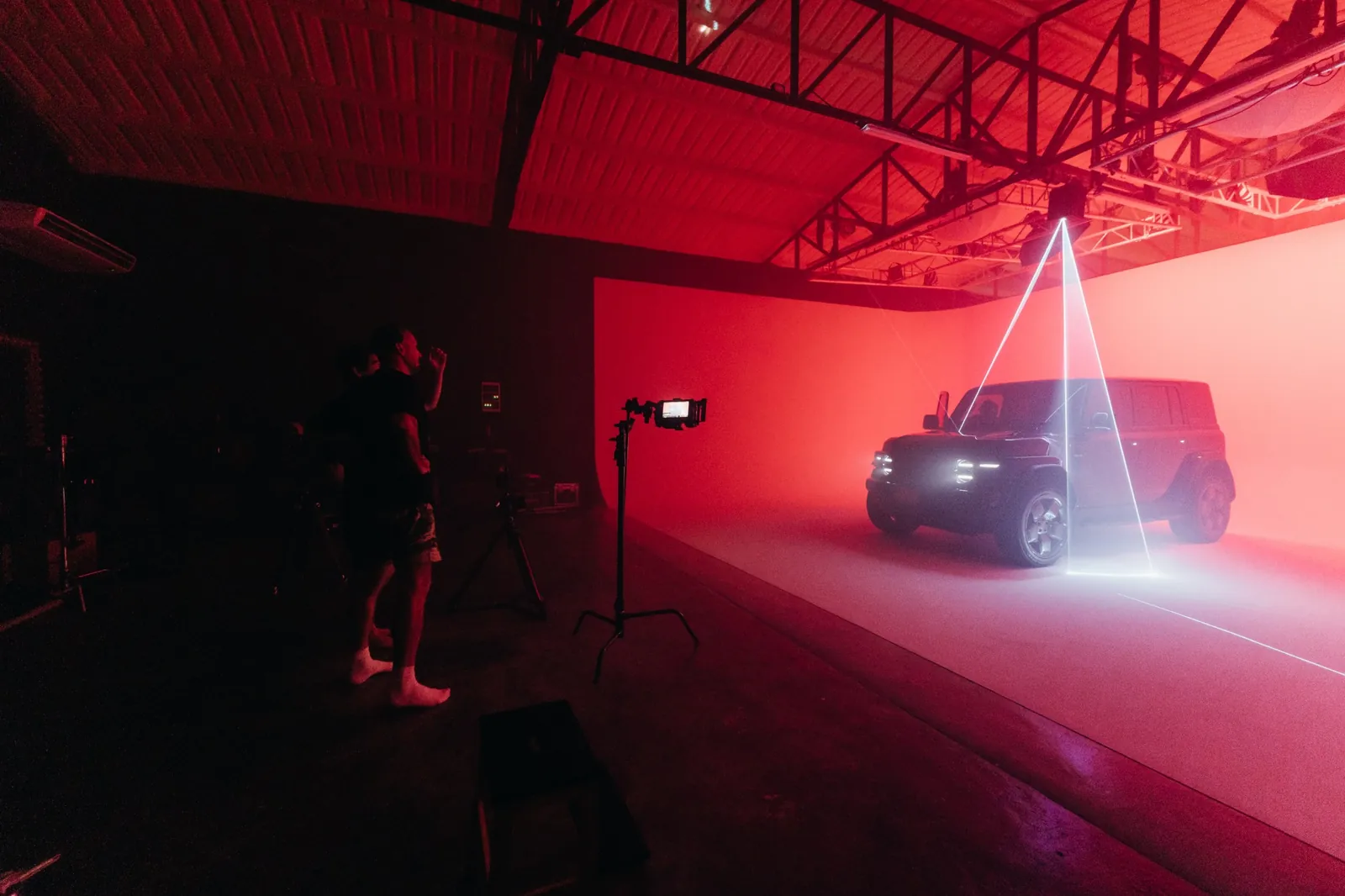
Motorized overhead trusses make it possible to rig lighting above the shooting area, while large vehicle-access doors allow cars and oversized props to be brought directly into the studio.
For automotive productions, this significantly simplifies logistics.
M Studio Asia can also provide professional lighting equipment rental, camera rental, grip equipment, lasers, projectors, smoke machines and production support in Phuket, allowing many of the technical requirements for a commercial car shoot to be handled from one location.
Every automotive shoot is different
This is exactly what we enjoy about automotive production.
Place two different cars in exactly the same position on the same white cyclorama and the final images can still be completely different.
The color of the vehicle, body geometry, paint finish, glass, chrome, interior design and personality of the brand all influence the lighting and camera approach.
One vehicle may look best under a huge soft white source. Another may come alive through RGB gradients. Some concepts need lasers and atmospheric smoke, while others may need nothing more than one perfectly controlled reflection running along the body.
Every automotive photo shoot and car commercial production therefore becomes a new experiment with light, reflection, color, camera position and movement.
That is why shooting cars on a large cyclorama continues to be one of our favorite types of commercial production.
Automotive Photography & Video Production in Phuket, Thailand
If you are looking for a car photography studio in Phuket, a studio for an automotive commercial, professional lighting and camera equipment, or a complete production team in Thailand, M Studio Asia can provide the space, equipment and technical support required for the project.
What Studio 150 is suitable for
Professional car photography
Automotive video production
Car commercials and advertising campaigns
Automotive social media content
New vehicle launches
Car interior photography and video
Motorcycle photography and video
Product photography
Branded content production
Large-scale commercial photo and video shoots
From a specialized automotive crew to a full commercial production, the studio can be adapted around the creative and technical requirements of each project. Send us your brief.
M Studio Asia: professional photo studio, video studio, car photography studio, equipment rental and video production in Phuket, Thailand.